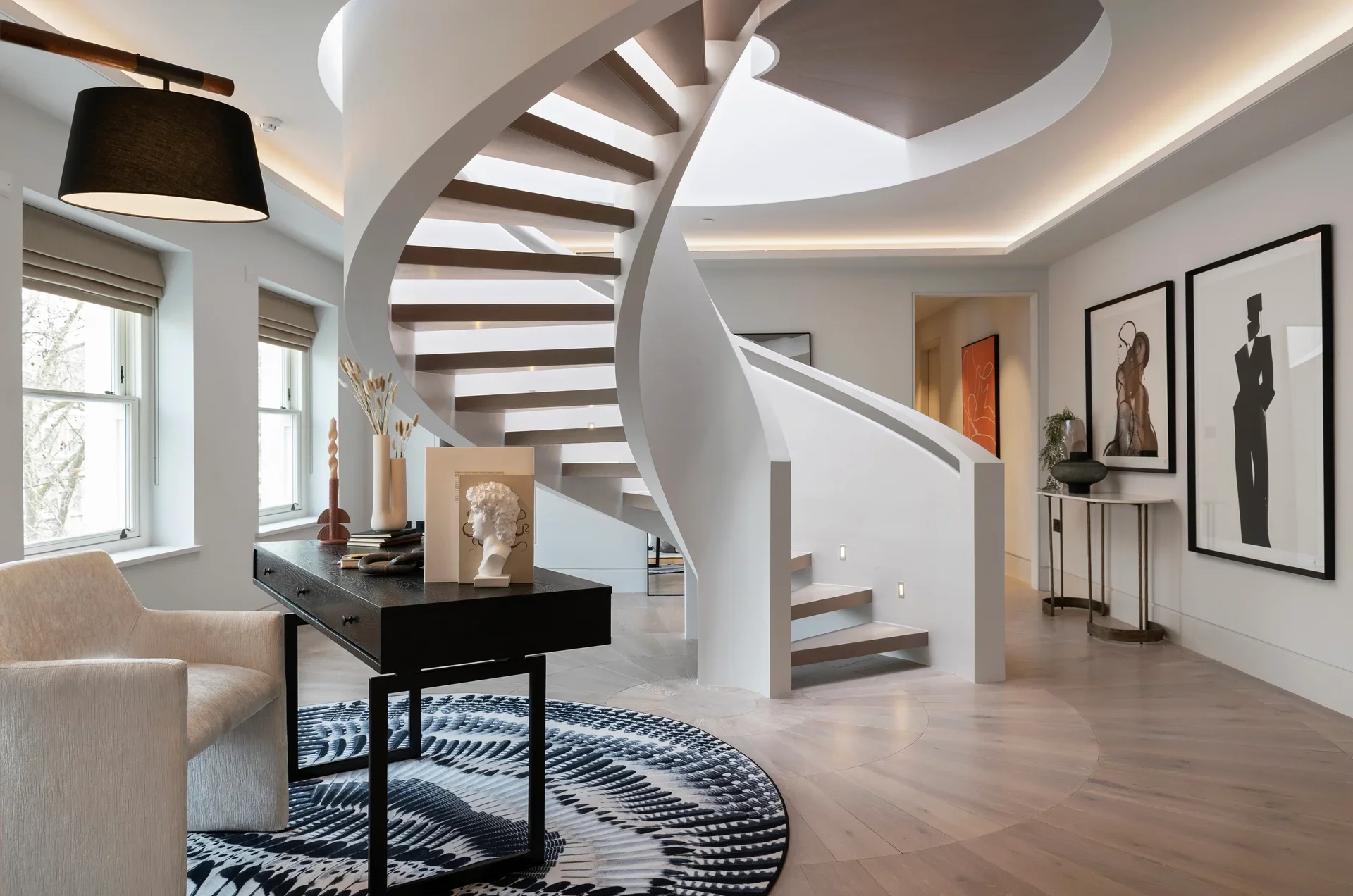
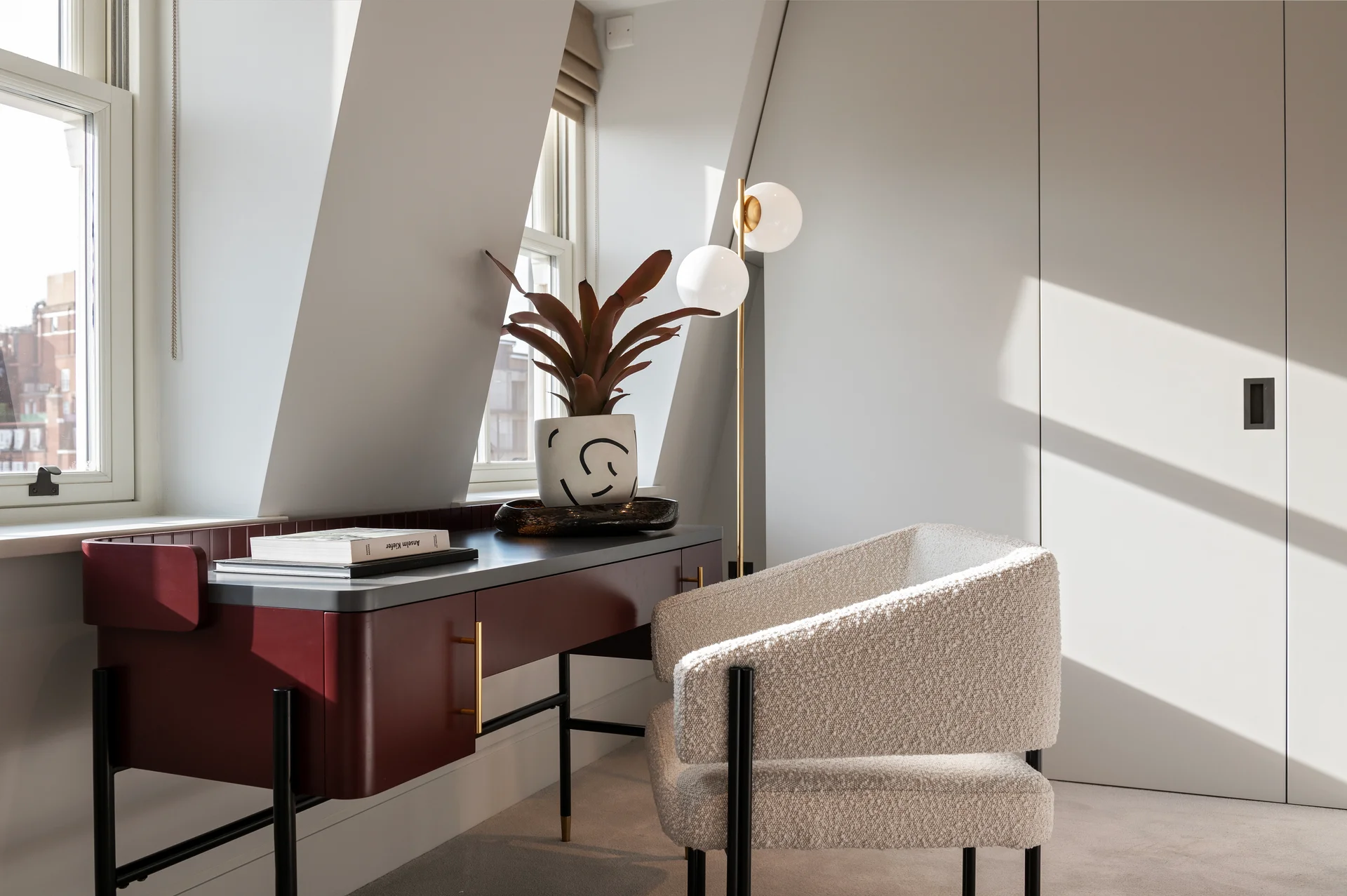
Working from home has become a mainstay for many of us, and yet so many people are still improvising. Some use a corner of the kitchen table while a pile of paperwork balances beside the toaster, but a dedicated spot is worth creating if you can, as it aids focus and can be made both comfortable and stylish.
The first thing to do is identify the right spot.
Choose the right spot
A hallway recess, a forgotten alcove, even the edge of a landing can serve. What matters is that it fits without blocking how you move through the house.
Natural light is good here, as it makes any cramped corner feel open. But if daylight is scarce, you can cheat a bit with layered lighting. Think one overhead source, a task lamp, and maybe a soft glow behind you to reduce eye strain.
Scale your desk to the space
A lot of people think an office needs a big desk, but if all you need is room for a laptop and notepad, go smaller. A wall-mounted design, a fold-down table, or a slim console can handle the job. If you are lucky enough to have more square footage, a desk with drawers gives you a place to stash pens, cables, and that stack of half-read documents.
The point is to find a desk that works without overwhelming the space around it.
Smart storage
Vertical storage is the best way to fight clutter in a small home office. Floating shelves pull things up off the floor, while pegboards and grids turn walls into working surfaces, keeping pens, scissors, and notes where you can see them.
A rolling cart or a small under-desk cabinet can disappear when not in use. Keep the desk itself clear and the space will feel bigger.
The chair that pulls double duty
If your workspace sits in a living room or bedroom, the chair is always in sight, so pick one with lines that suit the room rather than being too office-y. A dining chair with a cushion can work if you do not want a wheeled task chair rolling across the floor.
Just make sure it’s comfortable and supports your back.
Add character with small details
Even the most functional setup needs life, so choose a cool print on the wall, place a plant nearby, and use a lamp that feels like it belongs in a home rather than an office cubicle. Such touches make a workstation a part of the home.
If you want clearer separation, you can define the spot with colour. Paint a section of wall or lay down a rug that signals that it’s the office zone.
Hide the messy bits
A tidy workspace looks professional, and a tangle of cables looks temporary. Keep them under control with clips, sleeves or a basket fixed under the desk.
Wireless tools cut the problem in half before it starts. When you sit down, you should see a workspace ready for work, not a nest of cords.